Does sleep posture affect your low back pain?
Waking Up Sore? Your Sleep Position Might Be the Culprit
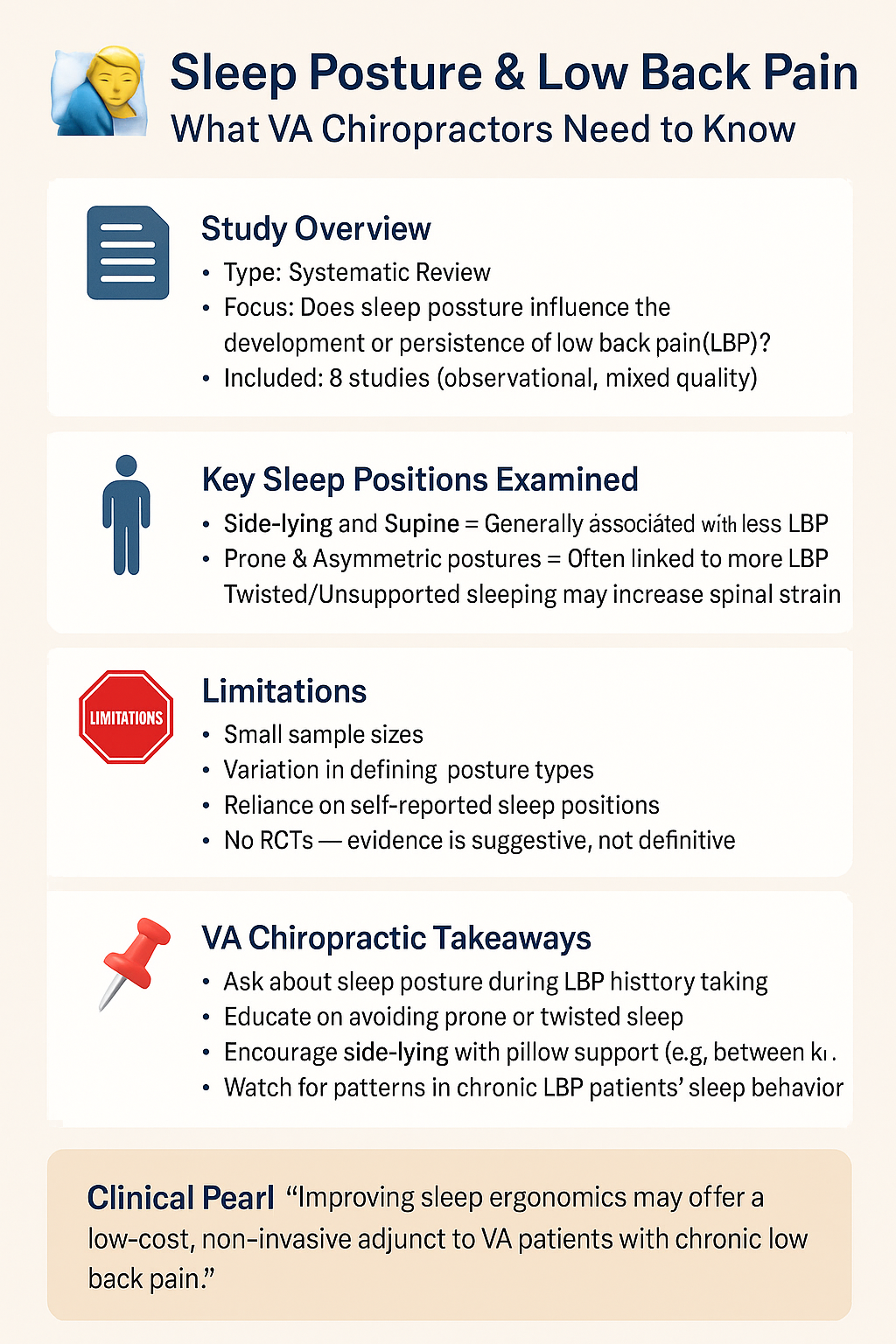
If you regularly wake up with an aching back, the way you sleep might be to blame. A 2025 systematic review published in Musculoskeletal Care evaluated the relationship between various sleeping postures and low back pain (LBP). The researchers analyzed six observational studies published between 2005 and 2024 to understand how different sleep positions either aggravate or alleviate back symptoms.
Here is what the research revealed about how you sleep:
The Back Sleeper (Supine): Sleeping on your back supports natural spinal alignment. The review found that this posture is associated with a lower prevalence of low back pain.
The Stomach Sleeper (Prone): If you sleep on your stomach, you might want to try changing your habits. The study found that prone sleeping actually increases the risk of LBP because it causes added lumbar strain.
The Side Sleeper (Side-lying): This is the most common sleeping posture, but its effectiveness relies heavily on how well you are supported. A side-lying position with supportive alignment reduces pain, but poor alignment in this position can worsen your symptoms.
The Toss-and-Turner (Variable): Switching between variable positions throughout the night showed minimal association with LBP.
The Takeaway The researchers concluded that sleep posture plays an important role in managing low back pain. For better spinal health, they recommend sleeping in the supine position or a supportive side-lying position, while avoiding stomach sleeping. Furthermore, ergonomic interventions like investing in proper bedding and practicing posture education are recommended as helpful strategies for finding relief from LBP.
